Pillow fundamentals
Latex Pillow Loft: Finding the Right Height and Feel
A pillow can look substantial on the bed and still collapse beneath your head. The useful question is not how tall it appears in a product photo, but whether its loft holds your head and neck in a comfortable, neutral position once you settle in. With latex, the answer depends on more than height alone: fill, shape, firmness, sleep position and mattress all play a part.
Finding the right latex pillow loft is less like choosing a number and more like fitting a small support system to your body. A few measured changes—especially with an adjustable pillow—can turn a pillow that feels almost right into one you hardly notice, in the best possible way.
Loft is height in use, not height on the shelf
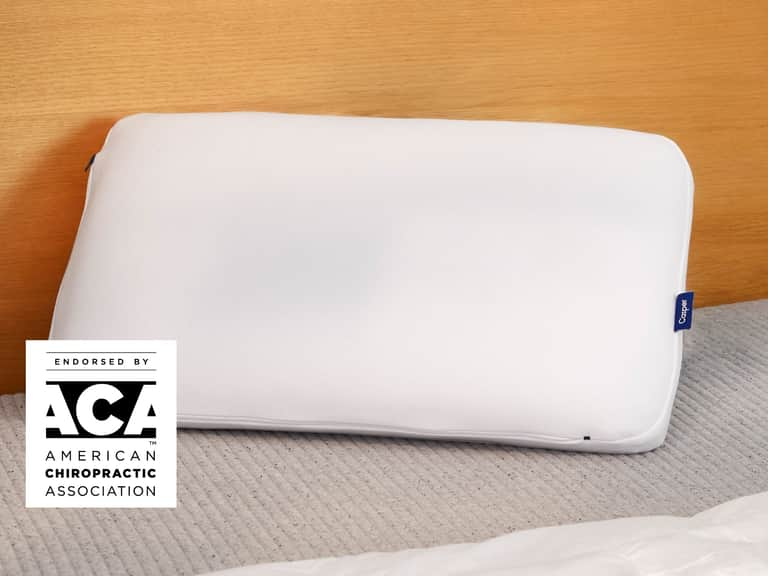
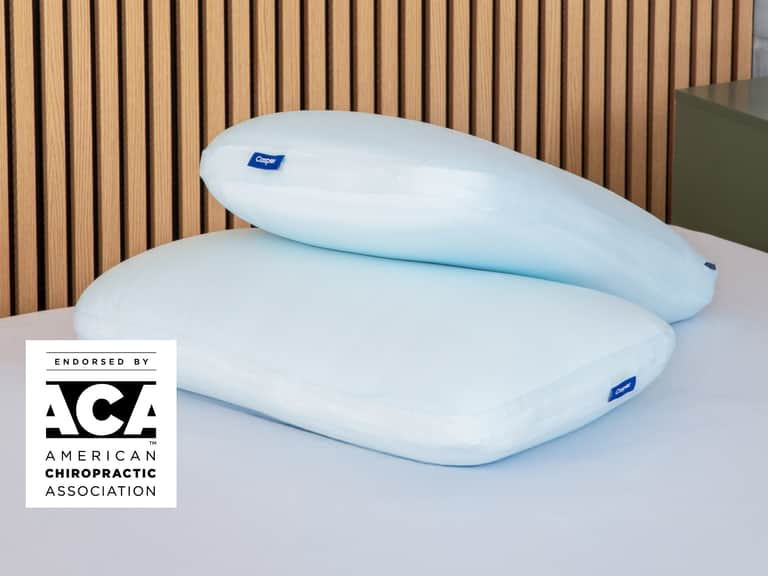
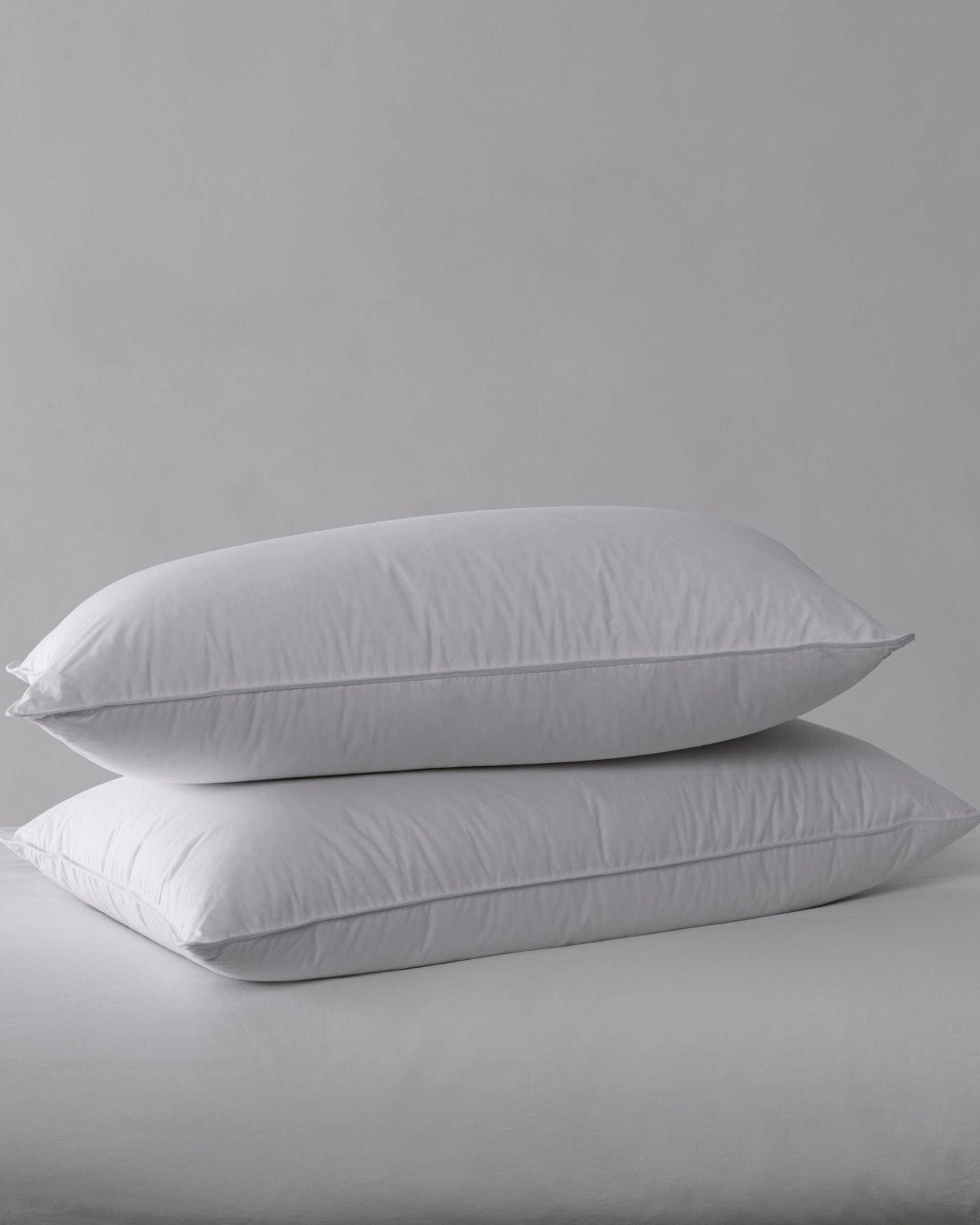
Loft describes a pillow’s height beneath the head. It is often called low, medium or high, but those labels are not universal measurements. More importantly, the height of an unoccupied pillow is not necessarily its working height. A soft pillow may look lofty before bedtime and compress considerably under pressure; a resilient latex pillow may retain more of its shape.
That difference matters because your head and neck do not rest in isolation. The pillow fills the space between your head and the mattress, while your shoulder and upper body settle into the bed. If the pillow is too low, the head may tip toward the mattress. If it is too high, the head may angle upward. Either mismatch can feel uncomfortable, although the right fit varies by person and cannot be diagnosed from sleep position alone.
Think of loft as the result of several interacting features: the pillow’s fill volume, its firmness, how readily the material compresses, and where your head rests on it. Shape also counts. A molded contour pillow and an adjustable shredded-latex pillow can have similar stated heights but feel quite different because one offers a fixed profile while the other can be rearranged.
Mattress feel adds another variable. A shoulder may sink more deeply into a softer mattress than into a firm one, changing the gap the pillow needs to fill. This is one reason a height that seems comfortable on a guest bed may not feel the same at home.
Start with your usual sleep position
Sleep position is a useful starting point, not a rulebook. Body proportions, shoulder width, mattress firmness and the habit of shifting during the night all influence pillow loft. Choose a position in which you spend much of the night, then assess how the pillow behaves there.
Side sleeping: fill the shoulder-to-head space
Side sleepers often need more loft than people who sleep on their backs or stomachs, because the pillow must bridge the space between the outer shoulder and the side of the head. A pillow that compresses too much can leave the head dipping toward the mattress. One that is too tall can push it away from the mattress. Either way, the neck may feel as if it is being held at an angle rather than resting naturally.
Shoulder width and mattress give make a difference. A broader shoulder can create a larger gap, while a mattress that allows the shoulder to sink may reduce it. Rather than choosing “high loft” on the label by default, try to keep the head comfortably in line with the rest of the spine. A mirror, a second person’s observation or a simple side-on phone photograph taken while you lie in your usual position can help you notice obvious tilting. It is a rough check, not a medical assessment.
Back sleeping: support without lifting the chin
Back sleepers commonly look for enough support to cushion the natural curve of the neck without raising the head excessively. A pillow that is too lofty may angle the chin toward the chest; one that is too flat may leave the neck unsupported. The ideal feel is individual, but comfort is a better guide than a promise that one profile will suit everyone.
Some sleepers prefer a gently shaped contour that supports the neck while allowing the head to rest in a lower area. Others prefer a more conventional shape, especially if they move frequently. If you test a contour design, give attention to both the raised edge and the hollow or central area: the pillow should feel usable in your ordinary position, not only when you hold perfectly still.
Stomach sleeping: avoid adding unnecessary height
Stomach sleepers often find that a thinner, more compressible pillow is more comfortable because a tall pillow can turn the head and neck sharply to one side. Some people sleep without a pillow beneath the head, or use a very low one, but preference and comfort vary. If you also roll onto your side during the night, consider whether the pillow remains comfortable in both positions.
One practical distinction: a pillow’s softness does not automatically make it a low-loft pillow. A generously filled pillow can still start high, even if it compresses when you lie down. What matters is the support that remains after it has settled under your weight.
Why latex changes the feel of height
Latex is valued in pillows for its resilient, springy response. Instead of slowly moulding around the head in the way some foams do, latex tends to push back as pressure is applied. That can create a buoyant sensation and help a pillow retain its shape, though the exact feel depends on the design and the amount of fill. “Latex pillow” is not a single construction: it may refer to a molded core or a case filled with pieces of shredded latex.
With a molded latex pillow, the overall profile is generally set by the shape of the core. Some designs are contoured, with a higher edge and a lower resting area; others use a more uniform shape. Molded pillows can suit people who want a consistent surface and do not want to adjust loose fill. The trade-off is less flexibility: if the profile does not match your body or bed, there may be limited room to change it.
Shredded latex works differently. The pieces can shift and be rearranged, and many designs allow fill to be added or removed. That makes loft more adaptable. Removing some fill can lower the pillow and soften its feel; leaving more in place typically gives it a fuller, firmer profile. The result is not an exact height adjustment—latex pieces redistribute and rebound—but it gives you a way to experiment instead of accepting a fixed shape.
Adjustability is especially useful when you are uncertain about your ideal pillow loft or alternate between positions. It can also help if your current pillow feels close to right but slightly too high or too dense. Still, adjustable does not mean endlessly adjustable: there is a point at which removing too much fill leaves too little support, or adding too much makes the pillow crowded and difficult to shape.
Latex density, piece size, cover construction and the amount of fill all affect the final sensation. A firm pillow with modest height may feel more supportive than a taller pillow that compresses readily. Read construction details when available, but treat descriptions such as “medium” and “high” as starting clues. Your experience at home is the meaningful test.
A careful way to adjust shredded latex
The most reliable approach is incremental. Begin with the pillow at its delivered fill level, if the manufacturer recommends doing so, and sleep on it for several nights. A pillow can feel unfamiliar at first, and one awkward night is not always enough to judge. At the same time, persistent discomfort is a reason to stop treating the pillow as a simple adjustment problem.
- Notice the position you wake in. If you regularly begin on your side but wake on your back, assess more than one position rather than tuning the pillow for a single moment.
- Check for obvious tilt. Consider whether your head seems to angle upward or downward when you lie in your normal position. The goal is a relaxed, comfortable alignment, not a rigidly held pose.
- Change a small amount of fill. Open the pillow according to its instructions and remove or add a modest quantity. Make changes over a clean, contained surface; loose latex pieces can be awkward to gather.
- Redistribute the fill before judging. Shake, knead or gently shape the pillow as appropriate for its construction. Then use it for several nights before deciding whether another adjustment is needed.
- Keep excess fill somewhere safe. A sealed bag makes it easier to restore the original loft if you remove too much or your preferences change.
Do not make large changes simply to chase a particular measurement. A lower pillow can still feel firm, and a fuller pillow can sometimes be shaped into a less elevated resting area. Aim for a comfortable combination of height and support, not a particular number of inches.
Molded latex: choose the shape as well as the height
Because molded latex usually cannot be adjusted by removing fill, its contours deserve a closer look. A contoured pillow may have a higher and a lower side, giving you two profiles to try. If the pillow has a hollow for the head and a raised neck edge, the design assumes a particular way of positioning yourself. Some sleepers appreciate that defined support; others find it restrictive when they turn or change positions.
Check the dimensions and the pillow’s instructions, but do not assume a contour is inherently more ergonomic than a conventional shape. The relevant question is whether the surface fits your body and feels comfortable through ordinary movement. A pillow can be thoughtfully shaped and still be the wrong height for you.
For people who prefer a stable, uniform feel, a molded core may be appealing because it does not require nightly fluffing or fill adjustments. For those who want to fine-tune pillow loft, shredded latex offers more room for personalisation. These are differences in use and feel, not a ranking of which construction is universally better.
Care: protect the latex core
Latex pillow care depends on the specific construction, so the care label and manufacturer’s instructions should take precedence over general advice. Many latex cores should not be put in a washing machine. Water, agitation and prolonged drying can be unsuitable for some designs, and a damp core that is put back into use before it is fully dry can create problems.
A removable cover or protector is the simplest first line of defence. Wash it as directed, and keep the latex core itself away from spills where possible. If the core needs attention, spot-clean only when the care instructions allow it. Use a small amount of appropriate cleaner and avoid soaking the material. Allow the area to dry completely before covering or using the pillow again.
Direct sun and strong heat are also worth avoiding when the manufacturer warns against them. Some latex products can be affected by ultraviolet exposure or excess heat. Instead of leaving a pillow in a sunny window or placing it next to a radiator, refresh it in a dry, well-ventilated area according to its care guidance.
If a shredded-latex pillow is adjustable, remove or add filling carefully and secure the zipper before use. Keep loose pieces away from children and pets, and avoid washing loose fill unless the manufacturer specifically says that the material and construction can be cleaned that way. A removable cover may be washable even when the core is not; the distinction is important.
Common mistakes when choosing pillow loft
- Shopping by appearance alone. A tall pillow in a photograph may compress substantially, while a compact-looking latex pillow may feel quite firm. Look beyond the unoccupied shape.
- Assuming every side sleeper needs the same height. Shoulder width, mattress softness and personal comfort all influence the space the pillow must fill.
- Confusing firmness with loft. Firmness describes resistance to pressure; loft describes height. They influence each other in use but are not interchangeable.
- Making several changes at once. If you change the fill, sleeping position and mattress setup on the same night, it becomes harder to know what helped.
- Ignoring the care label. A washable cover does not necessarily mean the latex insert is washable. Check each component separately.
- Expecting a pillow to treat pain or a medical condition. A pillow may contribute to comfort, but it is not a diagnosis or a substitute for professional advice.
When comfort calls for a different approach
Persistent neck pain, numbness, tingling, headaches or symptoms that interfere with daily life deserve attention beyond pillow shopping. A different loft might improve comfort, but it cannot establish the cause of symptoms. A qualified health professional can help assess ongoing or concerning problems, particularly when symptoms are new, worsening or associated with an injury.
For ordinary pillow testing, keep the experiment simple and patient. Use your normal mattress and bedtime routine. Note your starting position, whether you wake to reposition the pillow, and how the neck and shoulders feel in the morning. These observations are more useful than trying to judge a pillow during a quick test in a store.
Give a new setup a reasonable trial, but do not feel obliged to persist through discomfort in the name of adaptation. If a pillow repeatedly feels too tall, too low or difficult to settle into, its construction may not suit your preferences. Adjustable shredded latex gives you a chance to tune the fill; a molded design asks you to choose the profile that fits from the start.
A simple decision guide
If you are selecting a latex pillow, start with the experience you want rather than a slogan. Do you want a pillow that can be altered over time, or one that holds a defined shape? Do you prefer a buoyant, springy response or a softer surface around the head? Do you mostly sleep on your side, back or stomach—and does your mattress let your shoulder sink?
- Consider shredded latex if adjustable loft is a priority and you are comfortable handling loose fill to fine-tune height.
- Consider molded latex if you prefer a consistent shape and can choose a profile that feels suitable without adjusting the core.
- Look at the cover as well as the fill. A removable, washable cover can make routine care easier, but it does not change the cleaning needs of the core.
- Use sleep position as a starting point, then account for your body, mattress and comfort. Labels alone cannot make the final decision.
The right height is the one that disappears
The best pillow loft rarely announces itself. It lets the head rest without an obvious push upward or drop toward the mattress, and it supports a position that feels natural enough to hold. For one person, that may mean a low molded latex profile. For another, it may mean a fuller adjustable pillow with some fill removed after a few nights of testing.
Latex offers two useful paths: the steady profile of a molded pillow and the changeable height of shredded fill. Neither guarantees a perfect fit, but understanding the difference makes the search more deliberate. Measure comfort by how the pillow feels beneath your head—not how impressive it looks on the bed—and make small, thoughtful changes until its height and feel work together.